

Refrigerated transport · multi-temperature deliveries
Add route optimisation to your software for multi-temperature transport.
Let your customers adapt how goods are split between chilled, frozen and ambient zones according to their orders. API Optim optimises the movable bulkhead configuration, pallet loading and delivery sequence, directly from your software.
- Load and route optimisation
- Movable bulkheads and access constraints
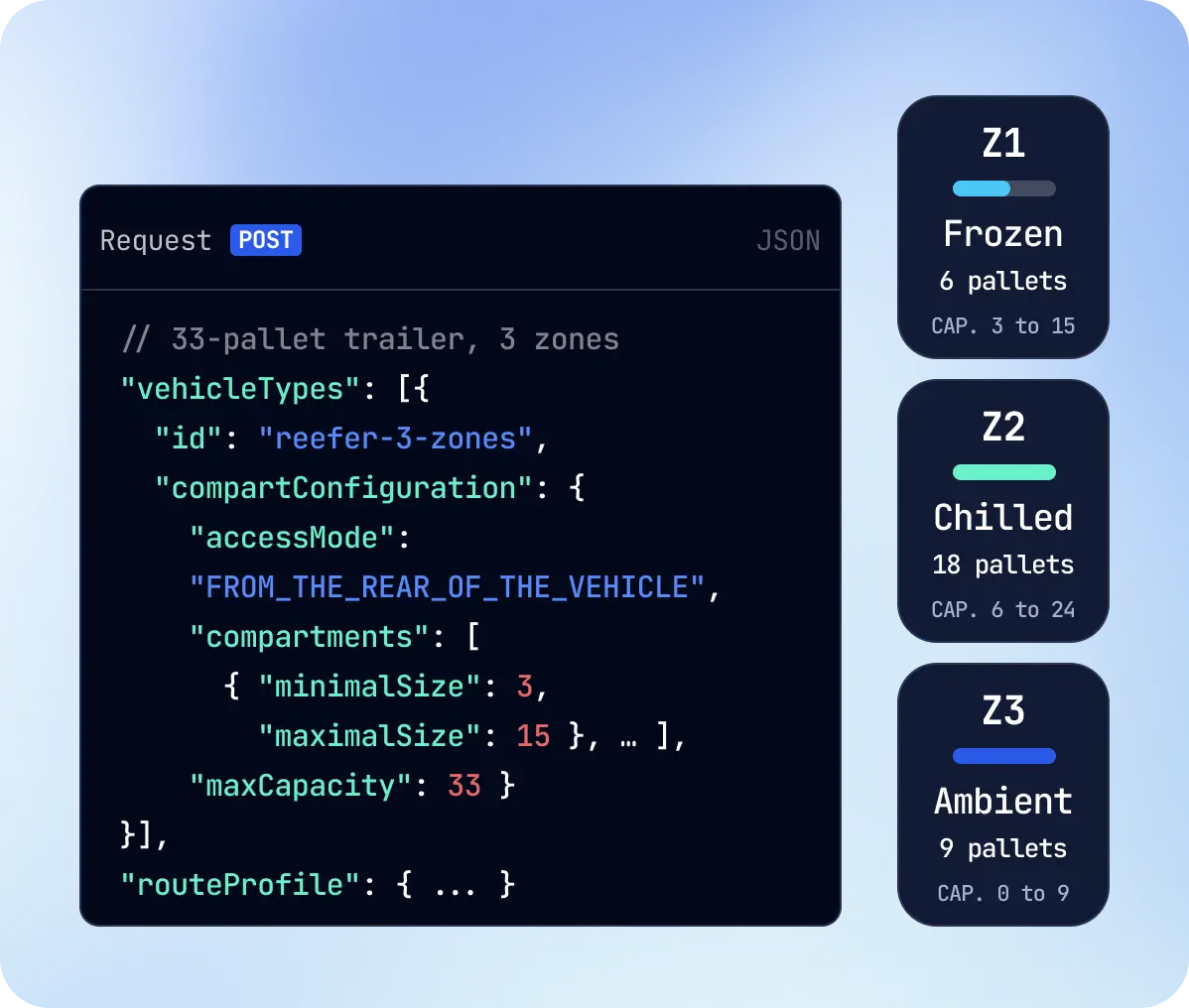
Dual or triple
Temperature zones that vary by day.
Declare the possible trailer configurations: the engine chooses the one that suits the orders.
Adjustable
Fixed or variable capacities
to make full use of movable bulkheads and take loading constraints into account.
650 companies
already use our route optimisation engine,
across all industries.
Constraints specific to refrigerated transport
Every refrigerated trailer comes with its own constraints.
Carrying chilled, frozen and ambient products in the same vehicle is not simply a matter of adding up pallets. Bulkhead position, zone capacity and access to the goods determine which deliveries are feasible.

Temperature zones that change with the orders
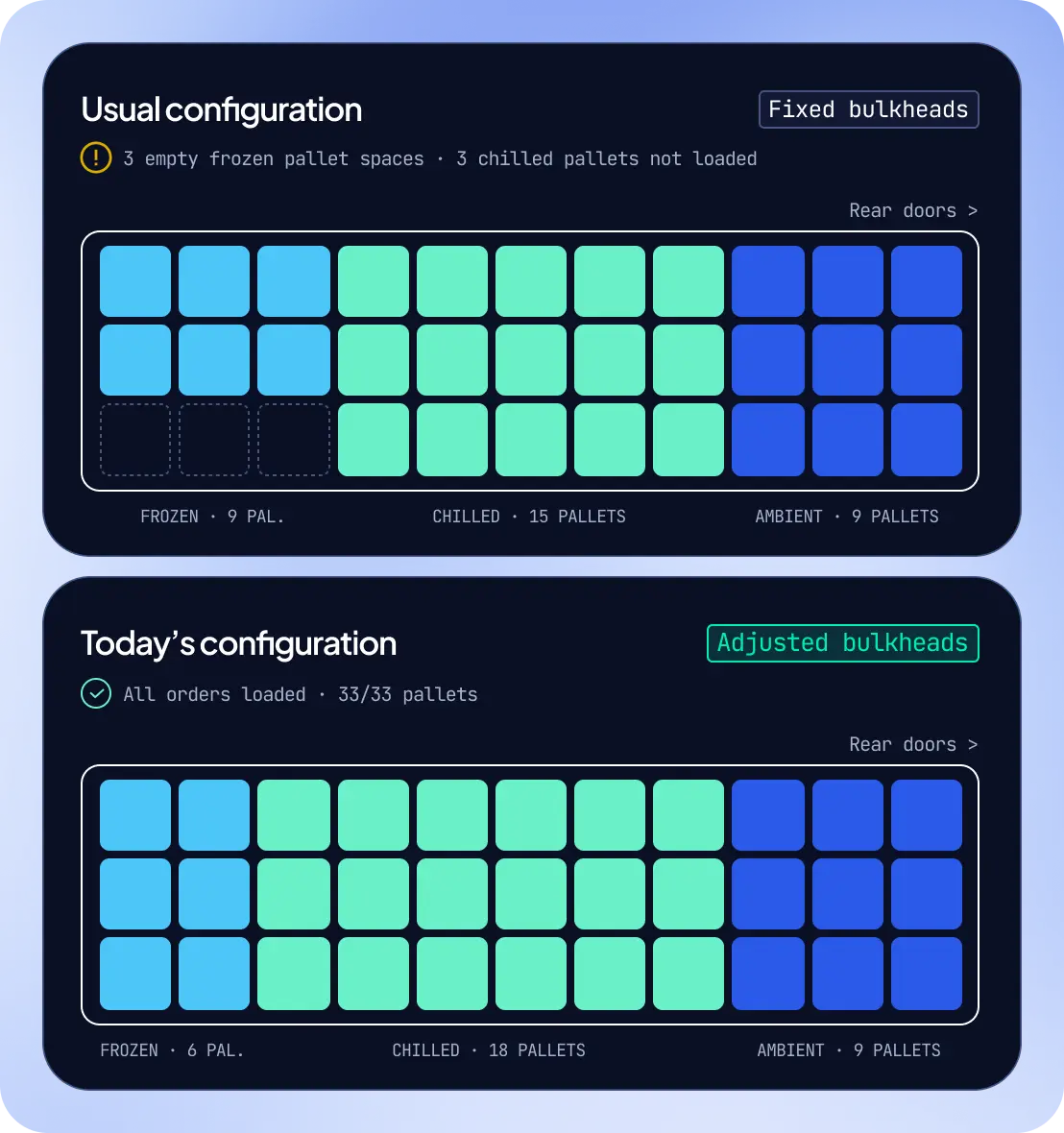
Transport needs change every day. One route may need more space for frozen products, while another mainly uses the chilled zone. With movable bulkheads, the space allocation adapts instead of staying the same for every route.

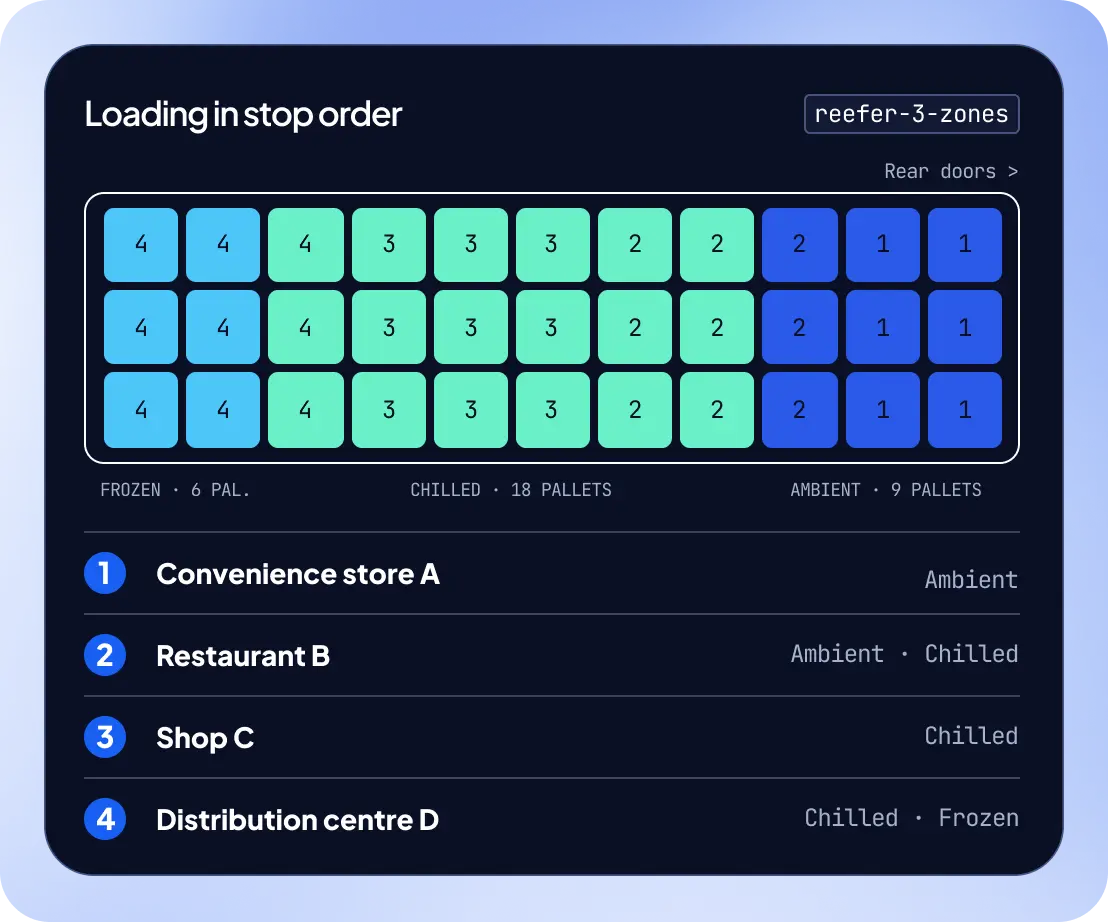
Loading that must follow the delivery sequence
In a trailer unloaded through the rear doors, pallets for the first delivery points must remain accessible. A poor allocation can mean moving goods to reach an order, even when the vehicle’s total capacity is sufficient.

Delivery points with different conditions
City-centre convenience stores and restaurants that only rigid lorries can reach, distribution centres with loading bays and strict receiving time windows: every delivery point has its own conditions. Routes must respect them without sacrificing trailer fill rates.
Why API Optim?
A refrigerated trailer is more than 33 pallets.
Does your software take into account the internal layout of your customers’ trailers? API Optim builds loading constraints into route calculation to find an allocation suited to the orders and the equipment.
| Criterion | Without compartment management | With API Optim |
|---|---|---|
| Trailer layout | Total vehicle capacity. | Each temperature zone described individually. |
| Vehicle configuration | A single configuration per trailer. | Several possible configurations (dual or triple temperature), chosen according to the orders. |
| Bulkhead position | Configuration set in advance. | Fixed or variable capacities taken into account in the calculation. |
| Pallet allocation | Allocation without detailed consideration of zones. | Allocation based on capacities and temperatures. |
| Access to goods | Unloading order handled separately. | Access constraints built into the optimisation. |
| Route calculation | Routes optimised from orders. | Loads and delivery sequence optimised together. |
This comparison illustrates the difference with a simplified optimisation based on overall capacity. Features vary from one software package to another.
Optimisation tailored to each piece of equipment
Movable bulkheads used to the full on every route.
The ideal trailer configuration depends on the orders to be delivered. API Optim takes temperature zones and their constraints into account to find a load that works with the deliveries.
Pallets allocated to the right temperature zones
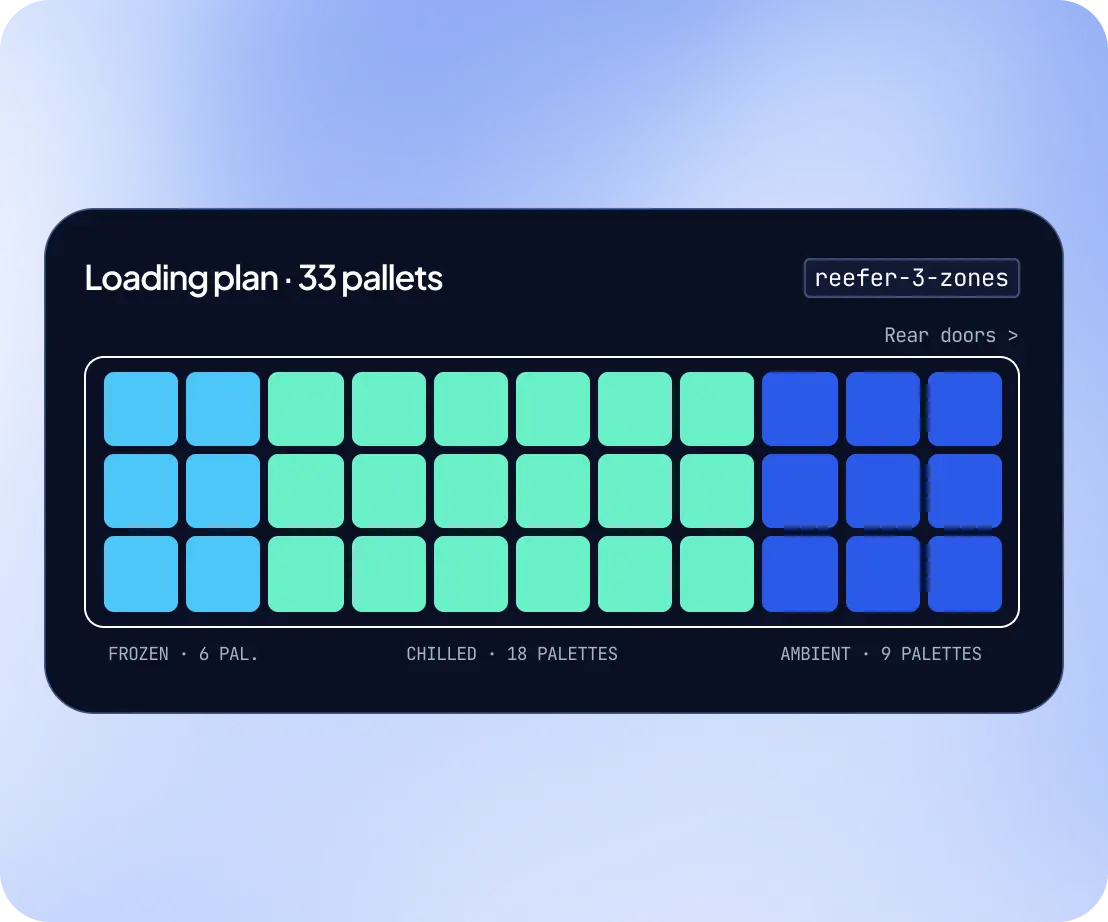
Your software describes the vehicles’ chilled, frozen and ambient spaces and their respective capacities. The engine takes each order’s requirements into account to assign goods to suitable zones, never placing a product in a zone incompatible with its transport temperature.
Zone capacity adjusted to the orders
Where the equipment allows, movable bulkheads offer a degree of flexibility. API Optim uses the declared variable capacities to adapt the size of each zone to the volumes to be carried. Can the trailer run with two or three temperature zones? Your software declares the possible configurations, and the engine selects the one that suits the route’s orders.
Loading in delivery sequence
With rear doors, only the zone behind the last bulkhead is accessible at each stop. API Optim works out the allocation of goods and the delivery sequence together, taking this constraint and receiving time windows into account. Drivers get a load that matches the order of their stops.
An API designed for your business software
Add refrigerated route optimisation to your software in three steps.
Your planning software stays at the centre. API Optim calculates zone sizes, the allocation of pallets across temperature zones and the delivery sequence, then returns results ready to use in your software.
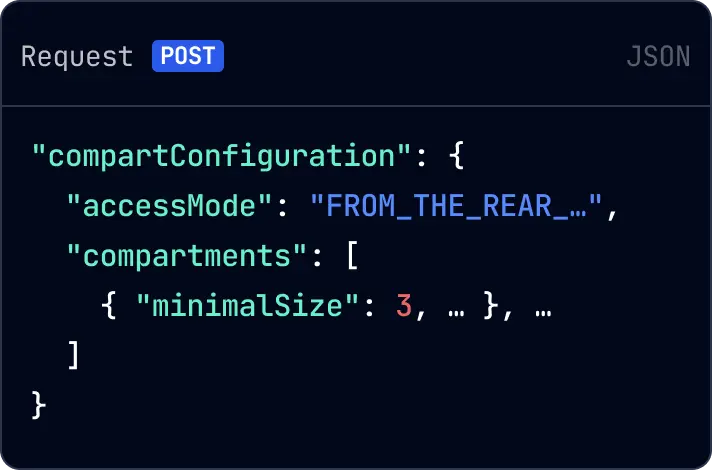
Step 1
Describe your customers’ trailers and their constraints
Your software sends the vehicle characteristics: temperature zones, fixed or variable capacities in pallets, possible configurations and rules for access to goods. The compartCapacityAndAccessRule model is used to describe these constraints.
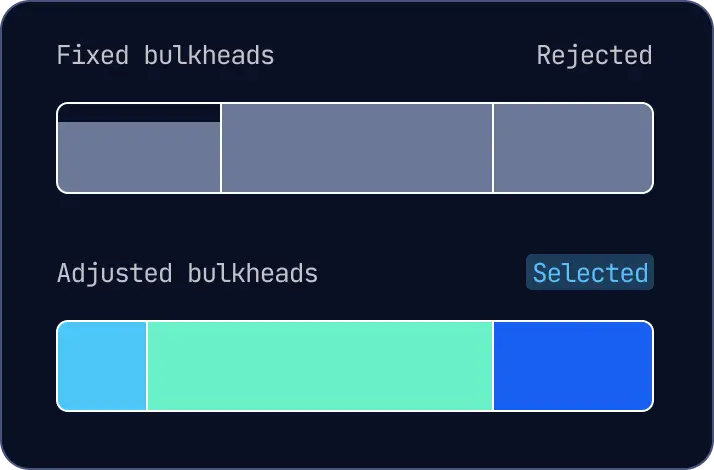
Step 2
Let the API calculate loads and routes
The engine looks for an allocation of goods that fits zone capacities and access constraints. It also takes receiving time windows and the delivery sequence into account to build feasible routes.
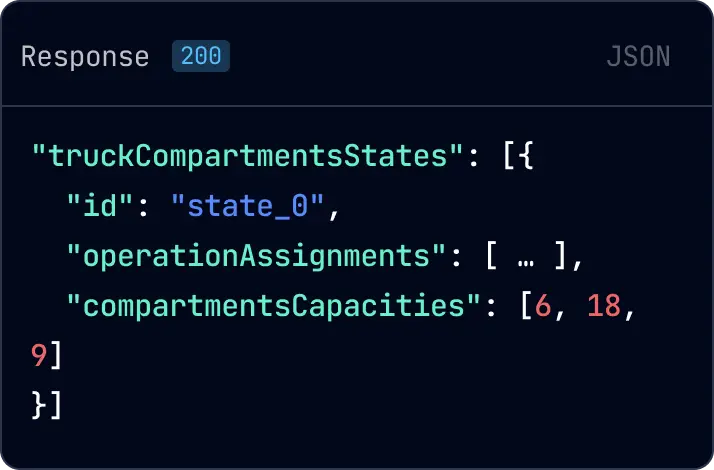
Step 3
Retrieve a ready-to-use loading plan
Your software receives the optimisation results: allocation of goods, calculated size of each zone and stop sequence. This information is returned via truckCompartmentsStates.
What your customers gain
More goods carried with the same fleet.
Better allocation of temperature zones lets your customers load more orders into their existing trailers. The aim: reduce unused capacity and limit the need for additional transport resources.

Better-filled trailers
Bulkhead position adapts to the orders’ needs, without needlessly reserving space for a little-used zone. Available capacity is put to better use, while respecting temperature and loading constraints.

Fewer routes and less subcontracting
When orders can be grouped into vehicles that are already available, the need for an extra lorry decreases. Route optimisation also helps limit the kilometres driven.

Routes that adapt to changes in activity
Volumes of chilled and frozen products vary with the time of year, promotions and seasonality. Your software reruns the optimisation with the new orders to find a loading configuration and routes suited to demand.
FAQ
Your questions about multi-temperature route optimisation.
How can delivery routes be optimised in refrigerated transport?
API Optim takes orders, vehicles, temperature zones and loading constraints into account to find an allocation of goods and routes suited to your customers’ operations.
Can the API handle trailers with movable bulkheads?
Yes. Your software can describe zones with fixed or variable capacities, so that the engine takes into account the configuration options of refrigerated trailers.
Can it handle dual- or triple-temperature trailers?
Yes. Your software declares the possible configurations of a vehicle, for example with or without a frozen zone at the front. For each route, API Optim chooses the configuration best suited to the orders.
Can chilled, frozen and ambient products be carried in the same lorry?
Yes, when the vehicle is fitted with suitable zones. API Optim takes the declared compartments and constraints into account to allocate goods without assigning them to a zone incompatible with their transport temperature.
How does the API take pallet access into account?
Your software can describe the rules for accessing goods, particularly when unloading is done through the rear doors. The engine builds these constraints into the calculation to find a delivery sequence compatible with the load.
Can the temperature zone allocation be changed for each route?
Yes, when the trailer configuration allows it. Variable capacities are taken into account to find an allocation suited to the route’s orders.
How are shop and restaurant delivery time windows respected?
Your software sends the receiving hours of each delivery point. API Optim builds them into the calculation to create a delivery sequence compatible with the time windows and with pallet access.
Do my customers have to change software?
No. API Optim integrates with your software. Your software sends the data needed for the calculation and retrieves the results, and your customers keep working in the interface they know.
Can the number of lorries needed for refrigerated deliveries be reduced?
By adapting zone sizes to the day’s orders, your customers can group more deliveries into the available vehicles and limit subcontracting. The gains depend on their fleet, volumes and delivery constraints.
How long does it take to integrate API Optim into my software?
It depends on your technical environment, the data available and the features to be integrated. Our team can review your project and help you define the exchanges between your software and the API.
Take the next step
Integrate the route optimisation API into your software for multi-temperature transport.
Could your customers’ trailers carry more orders with a different zone allocation? Let’s talk about it, starting from your software and your customers’ routes.
Industries related to multi-temperature transport

Live animal transport
Movable bulkheads and variable-size compartments, rear access.


